
A 19-year-old dorm-room idea. A $2.85 billion valuation. And the most turbulent founder story in Indian fintech.
Shashvat Nakrani was 19 and in his third year at IIT Delhi when he identified the MDR fee as the single biggest barrier keeping 60 million Indian merchants out of the digital economy. He built BharatPe to fix it. Ashneer Grover joined and turned it into one of India's fastest-growing fintechs. What followed — the growth, the controversy, the governance crisis, the settlement, and the quiet rebuild to profitability — is India's most complicated startup story.
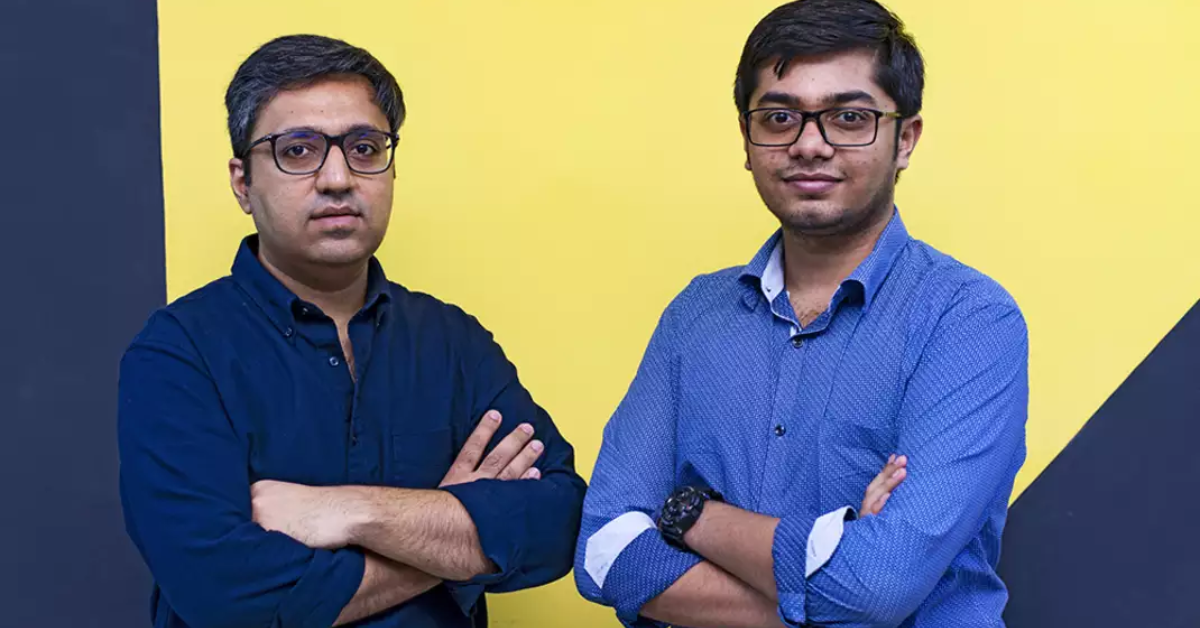
Ashneer Grover & Shashvat Nakrani
Co-Founders · BharatPe
The MDR Problem That Nobody Wanted to Fix
In 2018, India's digital payments ecosystem was booming on paper. Demonetization had forced hundreds of millions of people to experiment with UPI. PhonePe, Google Pay, and Paytm were registering jaw-dropping transaction volumes. The government was celebrating. The narrative was working.
But Shashvat Nakrani, a 19-year-old third-year student at IIT Delhi studying Textile Technology of all things, had spotted something that the celebration was drowning out. The 60 million small merchants at the actual base of India's economy — the kirana stores, the tea stalls, the pharmacies, the vegetable vendors — were largely frozen out of this revolution. Not because they didn't have phones. Because accepting digital payments cost them money.
The Merchant Discount Rate — a 1–2% fee charged on every digital transaction — was invisible to consumers but catastrophic for merchants operating on margins of 3–5%. Nakrani and his co-founder Bhavik Koladiya identified UPI's interoperability framework as the lever. One QR code. Every app. Zero MDR. They called it BharatPe — and they built it in a college dorm.
Ashneer, the Series E and the Fastest Unicorn
Ashneer Grover brought the infrastructure that a dorm-room insight needed to become a company. IIT Delhi B.Tech, IIM Ahmedabad MBA, seven years at Kotak Investment Banking, Director at American Express, CFO at Grofers (now Blinkit). When he joined BharatPe as co-founder and CEO in July 2018, he brought a specific thesis: free payments was the customer acquisition strategy, but merchant lending — enabled by the transaction data BharatPe was accumulating — was the business.
The thesis was correct. By 2020, BharatPe had disbursed ₹1,000 crore in collateral-free merchant loans using its own proprietary credit model. No bank had the transaction data to underwrite these borrowers. BharatPe had built it, one QR scan at a time. The $370M Series E in August 2021, led by Tiger Global at a $2.85 billion valuation, made BharatPe one of India's fastest-growing fintechs. Shashvat Nakrani, then 23, became the youngest self-made billionaire in the IIFL Hurun India Rich List. The origin story — two founders, a college dorm, and a problem nobody else wanted to solve — had delivered a $2.85 billion outcome in just three years.
The Governance Crisis, the Settlement and the Rebuild
The audit, the resignation, the FIRs, the legal battles — and then, in September 2024, the settlement. All cases dropped. Ashneer Grover exited the cap table entirely. His shares were transferred to a trust. "I repose my faith in the management and board," he wrote. "Peace."
What was left behind was not a carcass but a company that had quietly done the hard work of rebuilding. Nalin Negi, as CEO from 2023, stabilised operations, narrowed losses, and refocused the product roadmap. The lending flywheel — now ₹14,600 crore in disbursed merchant loans — kept compounding. The consumer products, from BharatPe UPI to Zillion rewards to Invest BharatPe, expanded the moat.
In August 2025, BharatPe announced adjusted PBT profitability for the first time. The only Indian fintech to hold simultaneously an NBFC, a stake in a Small Finance Bank, and an online Payment Aggregator licence, BharatPe had emerged from one of India's most public corporate crises with its foundational thesis intact: free payments, real lending, and 17 million merchants who needed both.
"We want to be the financial best friend of every small merchant in India — the one who shows up at the door, not just the one who answers the phone."
— Ashneer Grover, Co-Founder, BharatPe (2021)
Company Timeline
- Mar 2018
Shashvat Nakrani (19, IIT Delhi dropout) and Bhavik Koladiya co-found BharatPe in New Delhi. The founding insight: India's digital payments boom is excluding 60 million small merchants who cannot afford 1–2% MDR fees.
- Jul 2018
Ashneer Grover — IIT Delhi B.Tech, IIM Ahmedabad MBA, ex-VP Kotak Investment Banking, ex-CFO Grofers — joins as third co-founder and takes over as CEO. BharatPe launches India's first zero-MDR interoperable UPI QR code.
- 2019–20
Rapid growth. $75M Series C (2020) led by Ribbit Capital + Coatue. BharatPe crosses 5 million merchant partners. POS machine (BharatSwipe) launched. ₹1,000+ crore in merchant loans disbursed in 18 months.
- Aug 2021
$370M Series E led by Tiger Global at $2.85B valuation — the fastest Indian fintech to reach this milestone. Shashvat Nakrani, 23, becomes the youngest self-made billionaire in the IIFL Hurun India Rich List. Merchant count: 7M+.
- Jan–Mar 2022
Viral Kotak audio clip. Board-initiated Alvarez & Marsal governance audit. Ashneer Grover resigns as MD on February 28, 2022. Suhail Sameer becomes CEO. BharatPe files ₹88.67 crore fraud complaint against Grover family in December 2022.
- 2023–24
Nalin Negi becomes CEO after Suhail Sameer's exit. Company stabilises and refocuses on merchant lending and consumer products. Legal settlement with Ashneer Grover concluded September 2024 — all cases dropped, Grover exits cap table entirely.
- Aug 2025
BharatPe achieves adjusted PBT profitability for first time — announced August 14, 2025. 17M+ merchant partners. ₹14,600+ crore loans disbursed. Unity Bank BharatPe credit card launched. Company is India's only fintech with NBFC + SFB stake + PA licence.
Frequently Asked Questions
Who are the founders of BharatPe and what happened to Ashneer Grover?
BharatPe was co-founded in March 2018 by Shashvat Nakrani (19, IIT Delhi dropout) and Bhavik Koladiya, with Ashneer Grover (IIT Delhi + IIM Ahmedabad, ex-Kotak VP) joining in July 2018 as CEO. Grover resigned in February 2022 after a governance controversy triggered by a viral audio clip and a subsequent Alvarez & Marsal audit. A September 2024 settlement ended all legal disputes — Grover exited the cap table entirely. Nakrani continues as Co-Founder & COO.
How does BharatPe make money if the QR is free?
BharatPe's revenue model is built on merchant lending. The transaction data from millions of merchant QR scans creates the world's most granular credit profile for small businesses — data no bank possesses. BharatPe uses this to underwrite collateral-free business loans at scale, having disbursed ₹14,600+ crore as of 2025. Revenue also comes from POS device rentals (BharatPe Swipe), BharatPe One all-in-one device subscriptions, and consumer financial products.
How does BharatPe compare to PhonePe, Paytm, and Google Pay?
PhonePe, Google Pay, and Paytm are primarily consumer-side UPI apps. BharatPe is merchant-first: its QR enables acceptance from all UPI apps on one code (zero MDR), and its primary value proposition beyond payments is merchant credit. BharatPe is uniquely positioned as the only fintech with an NBFC (Trillionloans), a stake in Unity Small Finance Bank, and an online Payment Aggregator licence — a regulatory stack no UPI consumer app has assembled.
What is Unity Small Finance Bank and how is BharatPe involved?
Unity Small Finance Bank (Unity SFB) was formed by the merger of BharatPe's NBFC licence and the former Punjab & Maharashtra Co-operative Bank under RBI's resolution framework. BharatPe holds a significant stake in Unity SFB, giving it access to deposit mobilisation and banking infrastructure. The bank is a key pillar of BharatPe's full-stack financial services ambition — payments, lending, banking, and investment products — all anchored in the merchant relationship.